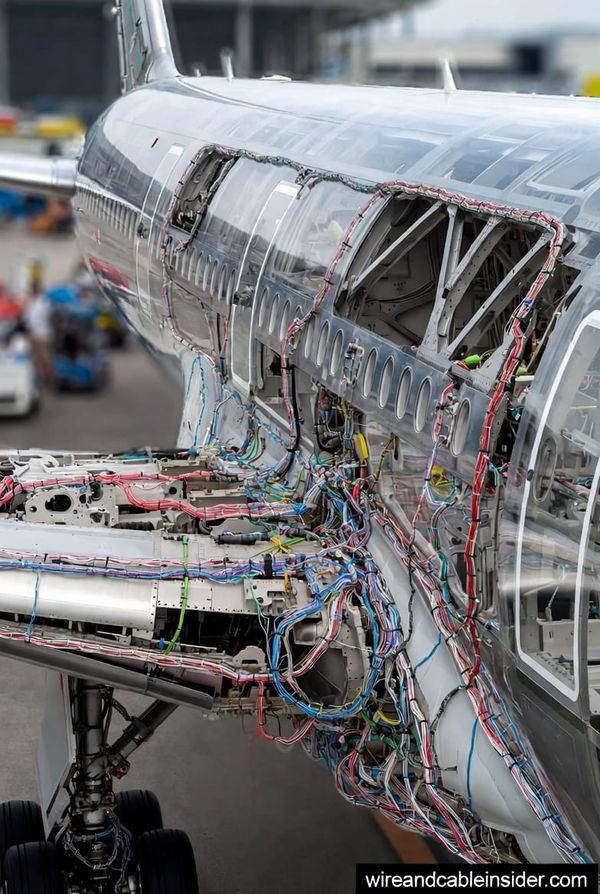
Powering the AI Revolution: Why the Wrong Heat Shrink is Choking Data Center Airflow
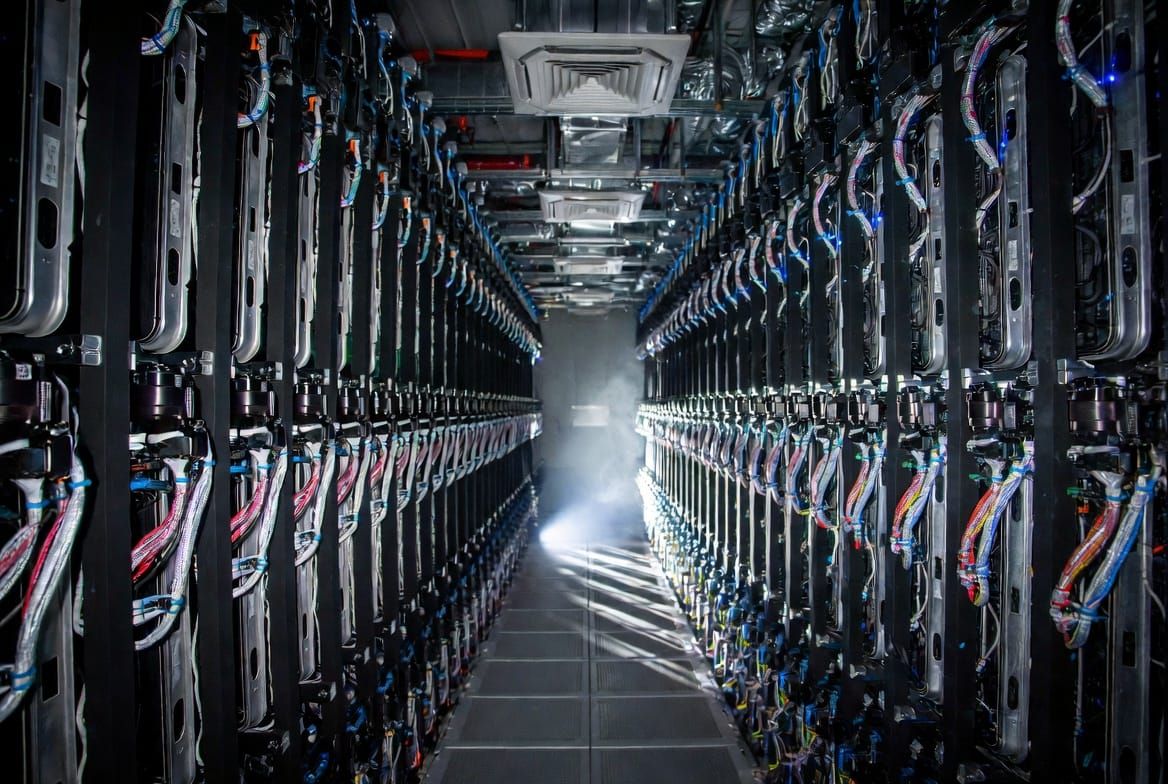
We are witnessing the largest infrastructure build-out in human history. Artificial Intelligence (AI) isn't just software running in the cloud; it is a massive, physical "factory" of high-density connectivity.
Walk into any of the gigawatt-scale data centers currently expanding across tech hubs like Texas, and you will see rows upon rows of ultra-dense server cabinets packed with hot-running GPUs. Inside these facilities, every single millimeter of space is a battleground. Thousands of individual fiber optic lines and low-voltage wires are bundled tightly together to feed the computing monster.
But a silent crisis is happening in the cable trays. When you jam millions of network connections into a single room, traditional, thick-walled standard heat shrink tubing becomes a massive liability. It isn't a weight issue anymore—it is entirely about volume and airflow.
Those fat, bulky wire bundles choke the precisely engineered cooling paths inside the server racks. When cold air can't circulate, GPUs overheat, leading directly to heat-induced throttling, system inefficiency, and wasted power.
The Industry Pain Points: The Nightmare of Edge Lifting and Pistoning
In these high-density setups, standard commercial heat shrink fails constantly. When network lines start dropping packets, technicians usually find one of two mechanical failures:
Flagging and Lifting
When a thick-walled piece of plastic tubing is shrunk down onto a delicate fiber strand or a small-gauge wire, its recovery force is simply too aggressive. The tube wants to snap back to its original shape so badly that the shrunk ends start to curl up and away from the wire jacket. This is called "flagging" or "lifting". In a packed cable tray, those lifted, rigid plastic edges act like tiny hooks, snagging on neighboring wires and tearing the sleeve completely off.
The Structural Grip of Pistoning
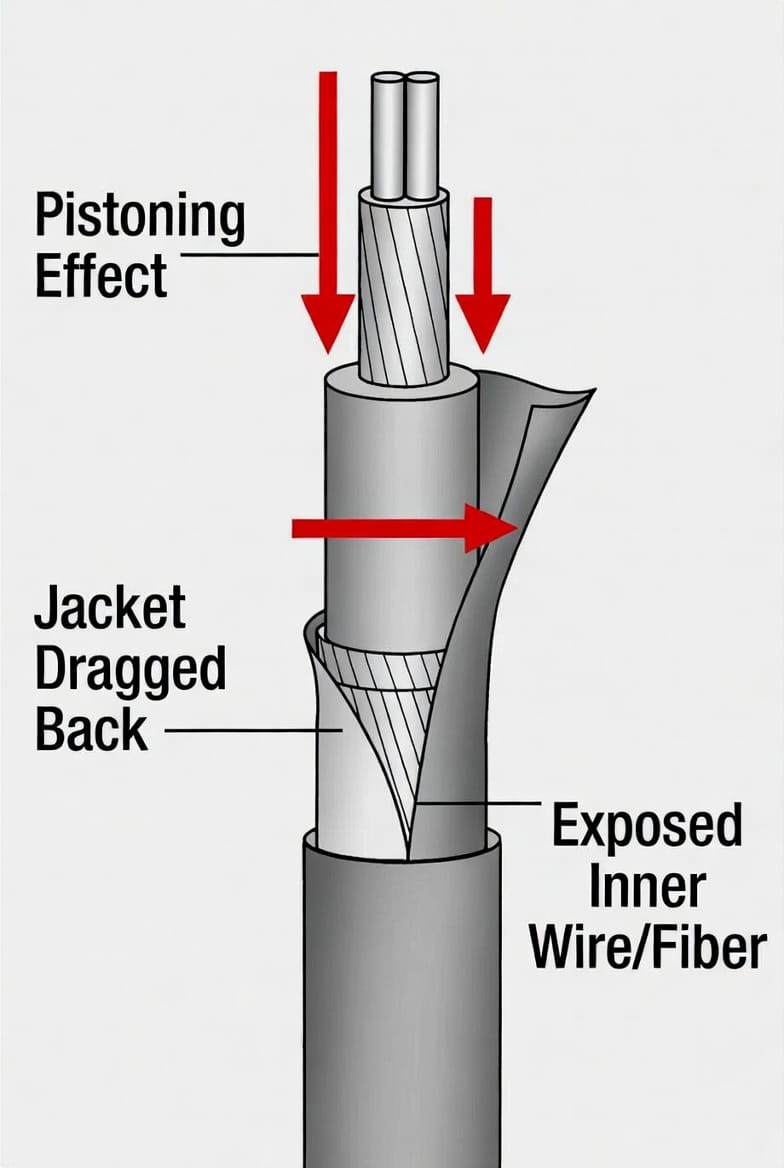
If lifting is bad, pistoning is a total cable killer. When a heavy, thick-walled sleeve shrinks, it clamps down on the delicate outer jacket of a cable with a violent mechanical grip. As the rest of the tube forces itself to shorten lengthwise during the heating process, that aggressive grip physically drags the cable's outer insulation backward along with it.
The jacket bunches up like an accordion, tearing away from the connector termination and exposing the bare internal glass fibers or copper conductors to the air. It ruins the entire cable assembly before the hardware even goes live.
The Solution: Precision Engineering
Choosing the right material isn't just a detail—it is the difference between an efficient uptime operation and a throttled, overheating data center.
Your Best Solution for Airflow and Fiber Protection: Sumitube F4(Z)
For the vast majority of low-voltage communication lines, using a standard 600V rated heat shrink adds useless bulk to the bundle. Sumitube F4(Z) is a specialized 300V rated material designed to be significantly thinner, lighter, and more flexible.
- Why it's the ideal choice: F4(Z) is highly flame-retardant, proudly carrying UL 224 (VW-1) and CSA approvals. It self-extinguishes instantly to protect high-value hardware from localized fire risks.
- The "Soft Grip": By dropping down to a 300V thin-wall profile, it completely clears up the bulk that blocks airflow. Its unique formulation applies a gentle, uniform squeeze that insulates perfectly without ever inducing the crushing pressures that cause pistoning or edge lifting.
Your Best Solution for Environmental Sealing: Sumitube O2B2S
When data center infrastructure requires a true, airtight environmental seal against moisture, humidity buildup, or airborne contaminants, your best solution is Sumitube O2B2S.
- Why it's the ideal choice: Most dual-wall, glue-lined heat shrinks leave a sloppy, uneven "glue-out" mess at the ends. O2B2S avoids that completely. Its cross-linked outer wall is lined with a modified polyamide adhesive engineered to flow precisely at melt temperature. It fills microscopic gaps and seals the component perfectly without creating a thick, rigid plastic slug that forces the edges to lift. It delivers this protection in convenient, continuous spooled lengths.
Quick Sizing and Part Reference Guide
To keep things simple, use this quick layout reference to identify the exact sizing profile needed for your specific wire layout:
Sumitube F4(Z) — Thin Wall 2:1 Profile (300V / UL VW-1 Rated)
- For Single Fibers (3/64" to 1/16"): Microscopic 0.25mm wall thickness. Best for wrapping individual, delicate fiber lines.
- Example Part Number:
F4(Z) 3/64 [Color] SPL - Example Part Number:
F4(Z) 1/16 [Color] SPL
- Example Part Number:
- For Small Wire Bundles (3/32" to 3/16"): Slim 0.30mm wall thickness. Best for wrapping a few network wires together.
- Example Part Number:
F4(Z) 3/32 [Color] SPL - Example Part Number:
F4(Z) 1/8 [Color] SPL - Example Part Number:
F4(Z) 3/16 [Color] SPL
- Example Part Number:
- For Medium Wire Bundles (1/4" to 1/2"): Flexible 0.36mm wall thickness. Best for wrapping medium-sized cable groupings.
- Example Part Number:
F4(Z) 1/4 [Color] SPL - Example Part Number:
F4(Z) 3/8 [Color] SPL - Example Part Number:
F4(Z) 1/2 [Color] SPL
- Example Part Number:
- For Massive Main Cable Trunks (3/4" to 1-1/4"): Thicker 0.43mm to 0.51mm wall thickness. Best for wrapping the biggest, heaviest bundles of cables in the main trays.
- Example Part Number:
F4(Z) 3/4 [Color] SPL - Example Part Number:
F4(Z) 1 [Color] SPL - Example Part Number:
F4(Z) 1-1/4 [Color] SPL
- Example Part Number:
(Standard Colors available: Black, White, Red, Yellow) (Standard Packaging: Spooled)
Sumitube O2B2S — Adhesive Lined 2:1 Profile (600V Rated / Spooled)
- Small Waterproof Seals (1/8" to 1/4"): Recovered wall ranges from 0.70mm to 0.75mm with an integrated adhesive liner.
- Example Part Number:
O2B2S 1/8 BLACK SPL - Example Part Number:
O2B2S 3/16 BLACK SPL - Example Part Number:
O2B2S 1/4 BLACK SPL
- Example Part Number:
- Medium Waterproof Seals (3/8" to 3/4"): Recovered wall ranges from 0.75mm to 0.90mm to seal medium cable groups.
- Example Part Number:
O2B2S 3/8 BLACK SPL - Example Part Number:
O2B2S 1/2 BLACK SPL - Example Part Number:
O2B2S 5/8 BLACK SPL - Example Part Number:
O2B2S 3/4 BLACK SPL
- Example Part Number:
- Large Waterproof Seals (1" to 2"): Heavy-duty wall scaling from 1.10mm up to 1.35mm to seal the absolute largest main cable entries.
- Example Part Number:
O2B2S 1 BLACK SPL - Example Part Number:
O2B2S 1-1/4 BLACK SPL - Example Part Number:
O2B2S 1-1/2 BLACK SPL - Example Part Number:
O2B2S 2 BLACK SPL
- Example Part Number:
(Standard Color: Black)
(Standard Packaging: Spooled)
* Note: Sizing configurations for 1/8", 3/16", 5/8", 1-1/4", and 2" serve as non-SAE specification reference variants.
Procurement and Technical Reference
For direct material cross-referencing, sourcing official manufacturer data sheets, or purchasing components, visit the directories at Sumitomo Electric Interconnect Products:




SCM2 wasn’t designed for hobby projects. It was built for tough industrial environments, construction equipment, communications infrastructure, and heavy machinery. Sumitomo engineered this heavy wall, adhesive lined tubing to survive relentless vibration, abrasion, moisture, and harsh chemicals.
We’ve been testing it extensively in the field, and while it was made for industry, we’ve found it solves a surprising number of real world repair problems that normal heat shrink or two part epoxy simply can’t touch. Around here, we call it the "Liquid Weld."
Here is a look at what makes this material different, how it actually works, and the field discoveries that have made it a staple in our toolboxes.
What Makes SCM2 Different
This is not standard electrical tubing; it is true dual wall tubing. It features a thick, cross linked polyolefin outer jacket paired with a massive inner layer of hot melt adhesive.
When heated to its shrink temperature of around 115°C (239°F), the inner adhesive completely melts. As the robust outer wall shrinks down with serious mechanical force, it pushes that liquid adhesive into every crack, crevice, and thread underneath it.
The result is a thick, rigid encapsulation yielding up to a 2.5 mm wall thickness on the larger sizes that seals, bonds, and reinforces the joint. Because of its specific chemical formulation, the hot melt adhesive bonds exceptionally well to:
• Metal (Aluminum, Copper, Steel, Lead)
• Plastics (Polyethylene, PVC)
• Rubber
• Wood
A Warning to the User: Once SCM2 cools and that bond sets, it is extremely difficult to remove. Make absolutely sure you have the tubing positioned correctly before you apply heat, because you cannot simply slice it away with a razor blade later.
Proven Industrial Uses & Field Discoveries
Because SCM2 acts as a mechanical splint and an absolute moisture barrier, its use cases go far beyond standard wire insulation. This material was built for serious environments, and it shows.
Here are the proven industrial applications and field discoveries where SCM2 excels:
• Heavy Equipment and Off Road Vehicles: Provides brutal undercarriage protection for rugged utility trailers and heavy haulers exposed to road salts and magnesium chloride.
• Frame Reinforcement: Used to sleeve and reinforce cracked or rusted frame tubes on go karts, ATVs, and commercial mowers. The adhesive fills the pits while the jacket locks out future moisture.
• Wiring Harness Protection: The ultimate solution for sealing and protecting vulnerable wiring harnesses on trailers, trucks, and construction equipment against abrasion and water ingress.
• Tool Handle Rescue: Perfect for repairing damaged or splintered tool handles (shovels, axes, pry bars) and creating thick, durable grips on heavy impact tools.
• Outdoor Infrastructure: Protects joints on metal fencing, light poles, and outdoor infrastructure to halt rust and provide rigid mechanical support.
• Low Pressure Hoses and Plumbing Penetrations: Ideal for low pressure applications like fixing cracks in your everyday garden hose or sealing around plumbing penetrations where pipes go through walls. For actual pressurized plumbing or irrigation systems, traditional repair methods are still recommended.
• Telescoping Metal Connections: Ideal for reinforcing antenna masts, flagpoles, and any telescoping metal poles to prevent the sections from wearing against each other.
Important Notes & Application
While SCM2 is incredibly durable, it is important to understand its operating limits to ensure a safe and permanent repair:
• Temperature Limits: SCM2 has a maximum continuous operating temperature of 120°C (248°F).
• Where NOT to use it: It should not be used on hot exhaust components, engine blocks, or directly on high voltage battery cables where temperatures exceed its rating.
• Application Tooling: A standard bathroom hair dryer will not get hot enough to melt the adhesive. A dedicated industrial heat gun is the proper tool for the job. If you are in the field without power, a butane torch can be used carefully, just keep the flame moving so you don't scorch the outer polyolefin jacket.
Always verify the repair is appropriate for your specific application and operating conditions.
Where to Source SCM2
Whether you are a mechanic outfitting a shop or a procurement manager maintaining a fleet of commercial trailers, getting your hands on authentic Sumitomo SCM2 is straightforward.
• Where to Buy: Head over to Heatshrink.com to secure your supply. (Pro Tip: Mention you saw this article on Wire & Cable Insider, you might just receive a discount on bulk orders!)
• Official Manufacturer Data: To verify the exact engineering specifications, check out the official data straight from the source: Sumitomo IRRAX™ Sleeve SCM2 Official Specifications
Disclaimer & FTC Disclosure
Wire & Cable Insider is an independent, educational publication dedicated to analyzing hardware architecture and the physical layer of the tech industry. To provide the most accurate and raw insights, this site is operated by an active industry professional.
Transparency Statement: The author is currently employed within the Sumitomo Electric Group Companies (SEG). However, all views, technical analyses, and opinions expressed on this website are strictly those of the author. They are completely independent and do not represent the official policy, position, endorsements, or views of SEG, its subsidiaries, or any other manufacturer mentioned on this site.
Content is provided strictly for general informational and reference purposes. We claim no liability for any property damage, injury, or failed repairs that may result from the use or misuse of the information provided. Readers must independently verify all specifications, technical data, and safety standards with the respective manufacturers before use in live environments.