Decoding Boeing BMS 13: The Aerospace Wiring Specifications Keeping Commercial Fleets in the Air
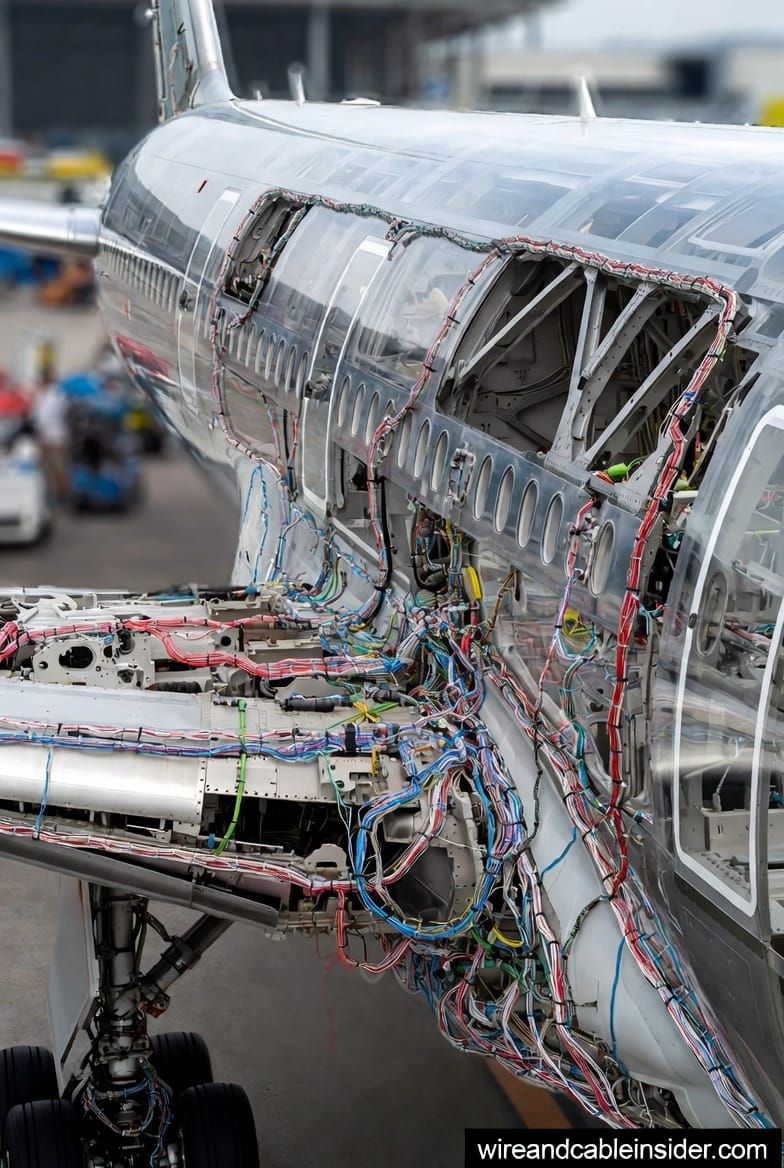
Commercial aviation demands absolute perfection from its electrical components. A modern passenger jet contains tens of miles of wire routing critical flight data, engine telemetry, and passenger systems. To guarantee that every inch of this massive nervous system survives extreme altitudes, thermal shock, and caustic aviation fluids, engineers rely on strict manufacturing standards.
In the aerospace industry, the Boeing Material Specification (BMS) 13 family is the definitive standard for commercial aircraft wire and cable.
For systems engineers and procurement teams, understanding the subtle differences between these specifications is critical. Here is a breakdown of what the BMS 13 specifications mean, the military equivalents, and where to source these highly regulated cables.
What the BMS 13 Specification Means
BMS stands for Boeing Material Specification. When a wire carries a BMS designation, it means it has undergone rigorous testing and quality control to meet the exact performance baselines required for Boeing commercial aircraft. The 13 category specifically governs electrical wire, coaxial cable, and optical fiber.
These specifications dictate everything from the conductor material and plating to the exact chemical composition of the insulation. They are designed to solve the three biggest enemies of aircraft wiring: vibration chafing, chemical exposure, and electrical arcing.
Decoding the Critical BMS 13 Variants
The BMS 13 family is vast, but several key specifications dominate modern aerospace engineering. Here is a look at the most prominent variants and the specific problem points they solve.
- BMS 13 48 (The General Purpose Workhorse): This is one of the most common specifications found on aircraft like the Boeing 777. It covers extruded cross linked ETFE (XL ETFE), 600V wire and cable for general use in both pressurized and unpressurized areas. SEA Wire and Cable outlines the core parameters for this spec as:
- Jacket Material: Extruded Cross Linked ETFE
- Voltage Rating: 600V
- Temperature Rating: negative 65ºC to +150ºC
- BMS 13 55 (The Thin Wall Innovator): Aerospace engineers are constantly looking to shed weight. This specification covers thin wall, insulated, fire resistant, high temperature cables. By using advanced polymers, the insulation is incredibly thin, allowing builders to pack more wires into tight bulkheads while reducing overall aircraft weight. ![Diagram illustrating thin wall aircraft cable insulation versus standard wall thickness for weight savings]
- BMS 13 58 (The Extreme Environment Armor): When wiring must survive near engines or unpressurized landing gear bays, it faces severe thermal changes and corrosive fluids. BMS 13 58 defines SWAMP (Severe Weather and Moisture Prone) wire construction and utilizes nickel coated copper conductors to withstand continuous exposure to brutal environments and extreme temperatures up to 260°C. If you are looking for SWAMP wire BMS 13 58, this is the exact specification needed for high vibration, fluid heavy zones.
- BMS 13 60 (The Arc Resistant Lifesaver): Electrical arcing is a catastrophic risk in aviation. If a wire chafes and arcs against an airframe, it can spark a fire. BMS 13 60 establishes the requirements for arc resistant wire and cable, often utilizing high temperature insulation capable of surviving environments up to 260°C.
- BMS 13 67 (The Fire Resistant Shield): Designed specifically for areas requiring maximum thermal protection, this specification governs insulated fire resistant and high temperature wire and cable. It is crucial for maintaining circuit integrity during emergency situations.
- BMS 13 71 (The Fiber Optic Future): This covers aerospace grade optical fiber cable, allowing massive data throughput while significantly reducing the overall weight of the aircraft.
- BMS 13 72 and BMS 13 80 (The Databus Network): Modern aircraft are essentially flying supercomputers. BMS 13 72 governs 100 Ohm databus cables designed for high speed signal transmission typically in the 1 to 100 MHz range. For systems requiring 120 Ohm impedance, engineers turn to the twinax construction of BMS 13 80.
BMS 13 Variant Quick Reference Guide
|
Specification |
Description |
Temp Rating |
Key Features |
|
BMS 13 48 |
General Purpose XL ETFE |
up to 150°C |
Used in pressurized and unpressurized zones |
|
BMS 13 55 |
Thin Wall Innovator |
High Temp |
Weight saving, thin profile for tight bulkheads |
|
BMS 13 58 |
SWAMP Wire |
up to 260°C |
Nickel coated copper, extreme weather and moisture armor |
|
BMS 13 60 |
Arc Resistant Lifesaver |
up to 260°C |
Prevents arcing fires, ultra high temperature insulation |
|
BMS 13 67 |
Fire Resistant Shield |
High Temp |
Maintains circuit integrity during flight emergencies |
|
BMS 13 71 |
Aerospace Fiber Optic |
Varies |
Replaces heavy copper for massive data throughput |
|
BMS 13 72 |
100 Ohm Databus |
Varies |
1 to 100 MHz high speed signal transmission |
|
BMS 13 80 |
120 Ohm Twinax Databus |
Varies |
Precision data networks for aircraft supercomputers |
The Broad Aerospace : SAE EquivalentAS22759 XL ETFE Cross Reference
While BMS 13 is the gold standard for Boeing airframes, the broader military, defense, and general aviation sectors utilize the SAE AS22759 (formerly MIL W 22759) specification for their Cross Linked Ethylene Tetrafluoroethylene (XL ETFE) requirements.
For engineers trying to find a Boeing BMS 13 48 equivalent AS22759 wire, the AS22759 XL ETFE family is broken down into specific slash numbers based on wall thickness, temperature ratings, and conductor plating.
Here is the quick reference guide to the industry's most common XL ETFE wire specifications:
The Single Wall Lightweight Series (150°C to 200°C)
These specifications feature a single, extruded layer of XL ETFE insulation, perfect for applications where weight and space savings are the absolute highest priority.
- MIL W 22759/32 | SAE AS22759/32: Tin coated copper (150°C)
- MIL W 22759/33 | SAE AS22759/33: Silver coated copper alloy (200°C)
- MIL W 22759/44 | SAE AS22759/44: Silver coated copper (200°C)
- MIL W 22759/45 | SAE AS22759/45: Nickel coated copper (200°C)
- MIL W 22759/46 | SAE AS22759/46: Nickel coated high strength copper alloy (200°C)
The Dual Wall Normal Weight Series (150°C to 200°C)
When maximum durability and abrasion resistance are required (such as exposed wheel wells or engine pylons), these specifications feature a dual layer XL ETFE insulation for extreme mechanical toughness.
- MIL W 22759/34 | SAE AS22759/34: Tin coated copper (150°C)
- MIL W 22759/35 | SAE AS22759/35: Silver coated copper alloy (200°C)
- MIL W 22759/41 | SAE AS22759/41: Nickel coated copper (200°C)
- MIL W 22759/42 | SAE AS22759/42: Nickel coated high strength copper alloy (200°C)
- MIL W 22759/43 | SAE AS22759/43: Silver coated copper (200°C)
Top Manufacturers of XL ETFE Aerospace Wire
Whether you are seeking Boeing specific BMS 13 cables or their AS22759 military counterparts, these wires are heavily regulated. They must be manufactured by OEMs listed on the government Qualified Products List (QPL) for compliance.
If you are evaluating aerospace XL ETFE wire suppliers, the most trusted manufacturers producing these high performance cables include:
- Amphenol (formerly Carlisle Interconnect Technologies): Following Amphenol's massive acquisition of CIT, they stand as an absolute heavyweight in both commercial aviation (Boeing and Airbus) and defense wiring.
- Judd Wire: Renowned for their highly durable aerospace hookup wire and custom jacketed cables. (For a deeper look into their advanced engineering, read our previous article: The Indestructible Nervous System: How Radiation Cross Linked Fiber Optics Conquered Aerospace).
- Thermax (a Belden Brand): Highly established and respected for their high temperature fluoropolymer wires.
- Nexans: A global leader specializing in extreme environment aerospace cabling.
- TE Connectivity (Raychem): A pioneer in cross linked polymer technologies and legacy aerospace wire development.
- Glenair (The Newcomer): Long known as a powerhouse in connectors and backshells, Glenair is a noted newcomer making serious waves in bulk wire manufacturing. With the rollout of their MIL STAR brand, they are producing fully qualified AS22759 wire and aggressively targeting the massive supply chain bottleneck by offering same day stock availability and zero Minimum Order Quantities (MOQs).
Where to Source Authorized BMS 13 Cable
Procuring aerospace wire requires extreme caution to combat counterfeits, which is critical for aviation safety. You cannot risk noncompliant materials making their way into a commercial airframe. Traceability and strict adherence to Boeing quality assurance standards through authorized channels are mandatory.
SEA Wire and Cable is a premier authorized distributor for these highly regulated products. They maintain a massive inventory of everything from the general purpose BMS 13 48 to the specialized BMS 13 80 databus cables. By partnering with an authorized distributor like SEA Wire and Cable, engineering teams guarantee that their materials meet exact Boeing standards, ensuring the safety and reliability of the fleet. More here: www.sea—wire.com
Frequently Asked Questions
What is BMS 13 48?
BMS 13 48 is a Boeing Material Specification for extruded cross linked ETFE wire and cable. It is a 600V general purpose wire used in both pressurized and unpressurized areas of commercial aircraft.
What is SWAMP wire?
SWAMP stands for Severe Weather and Moisture Prone. Specifications like BMS 13 58 define SWAMP wire construction, which uses nickel coated copper to survive continuous exposure to brutal environments, chemicals, and extreme temperatures up to 260°C.
What is the SAE equivalent to Boeing BMS 13 48?
The broader military and aerospace equivalent to BMS 13 48 is the SAE AS22759 family, specifically the XL ETFE variations like AS22759/32 through AS22759/46, depending on the required wall thickness and conductor plating.
Disclaimer
Wire & Cable Insider is an independent, educational publication. Content is provided strictly for general informational and reference purposes. The transparency statement regarding the author's employment can be found in our full site disclaimer. The views, thoughts, and opinions expressed in this article belong solely to the author and do not reflect the official policy, position, or views of any manufacturer, distributor, or standards body mentioned. Readers must verify all specifications, technical data, and safety standards independently with manufacturers before using them in live environments.